Explore the vibrant culture and timeless history
Stilt Fishing in Sri Lanka: The Art of Balancing Tradition and Ocean Life
Mirissa

Photo Gallery
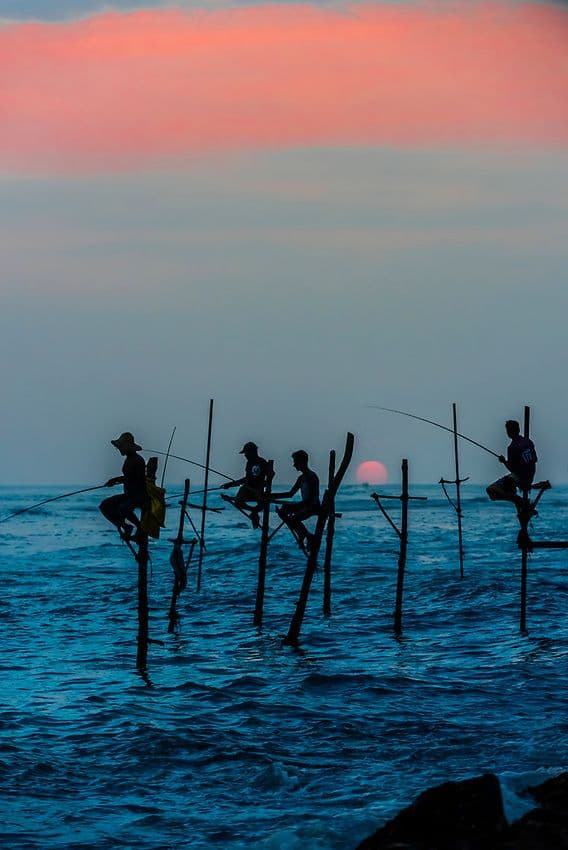
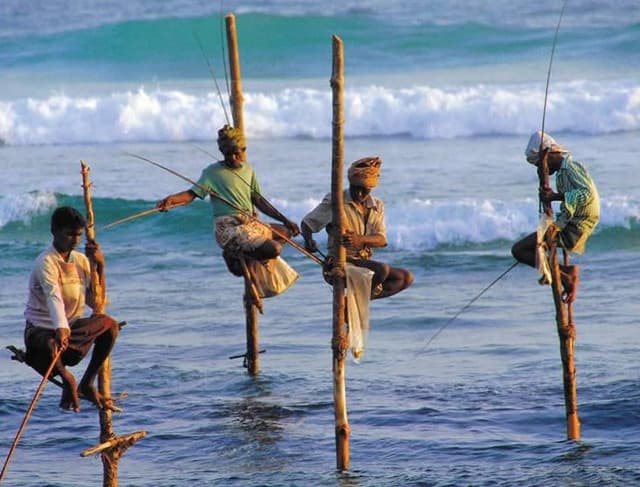
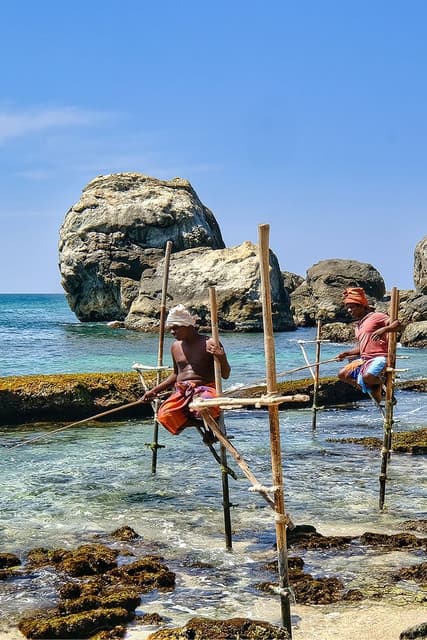

Stilt fishing is a unique and ancient method of fishing found along the southern coast of Sri Lanka, particularly in areas such as Koggala, Weligama, Dikwella, Galle, and Tangalle. Fishermen balance themselves on vertical wooden poles fixed into shallow waters, sitting on crossbars while casting their lines into the sea. This practice, passed down through generations, is not only a livelihood but also a cultural symbol of Sri Lanka’s coastal communities.
The sight of fishermen silhouetted against the horizon at sunrise or sunset is one of the most photographed and admired scenes in Sri Lanka. While modern fishing methods have largely replaced stilt fishing, many locals continue the practice to preserve tradition and share it with visitors. Tourists can often interact with fishermen, learn about the technique, and even try stilt fishing themselves under guidance.
Although modern fishing methods have reduced its everyday use, stilt fishing remains a cherished cultural symbol and a must-see experience for visitors exploring the southern beaches of Sri Lanka. It reflects not only a way of life but also the deep connection between the island’s coastal communities and the ocean.